
Exhibition at SET Studio London
Exhibition Opening: 17 June 2024
What the Frame Cannot Hold, opening at SET Studio, London on 17 June 2024, brings together works by Xi Huang, Shaoming Quan, Xingxuan Wang, Victoria Yuanli Yuan and Yuange Sheng. Across painting, digital image, sculpture, moving image and sound, the exhibition expands the idea of the “frame” beyond the physical edge of an image.
Here, the frame becomes a structure through which reality is organised: the body separates inside from outside, architecture regulates space and vision, screens and interfaces manage images and information, while perception itself determines what enters conscious attention.
Rather than celebrating the simple dissolution of boundaries, the exhibition considers how boundaries produce order through acts of classification, selection and exclusion. A frame is never entirely neutral. It makes the world legible while simultaneously determining what can be recognised as normal, coherent or valid. Across the five practices, bodies, buildings, technological systems, digital information and sound expose the instability of structures confronted by anomaly, residue and continual transformation.
Victoria Yuanli Yuan’s The Host Body approaches the body as a host system engaged in continual processes of absorption, filtration and regulation.
Titles such as Suppression (Healing), Anomaly (Newborn) and Assimilation (Advancement) are central to this tension: the same transformation can be named as suppression or healing, anomaly or birth, assimilation or progress.
The body is therefore presented not as a naturally fixed boundary but as a structure continually produced through acts of judgement and definition. “Anomaly” emerges less as an inherent condition than as a category generated by a system attempting to preserve its own coherence.
Yuange Sheng’s Tetris Skyline extends this logic into architecture and the city. Tetris-like openings divide the sky into geometric units that appear absorbed into monumental façades. An apparently limitless natural field is reformatted according to the modular logic of the built environment.
Architecture therefore operates not only as a container of space but as a visual regime, regulating the scale, direction and extent of perception. The sky is never genuinely contained by the building; instead, its fragmentation exposes the limits of the architectural frame itself.
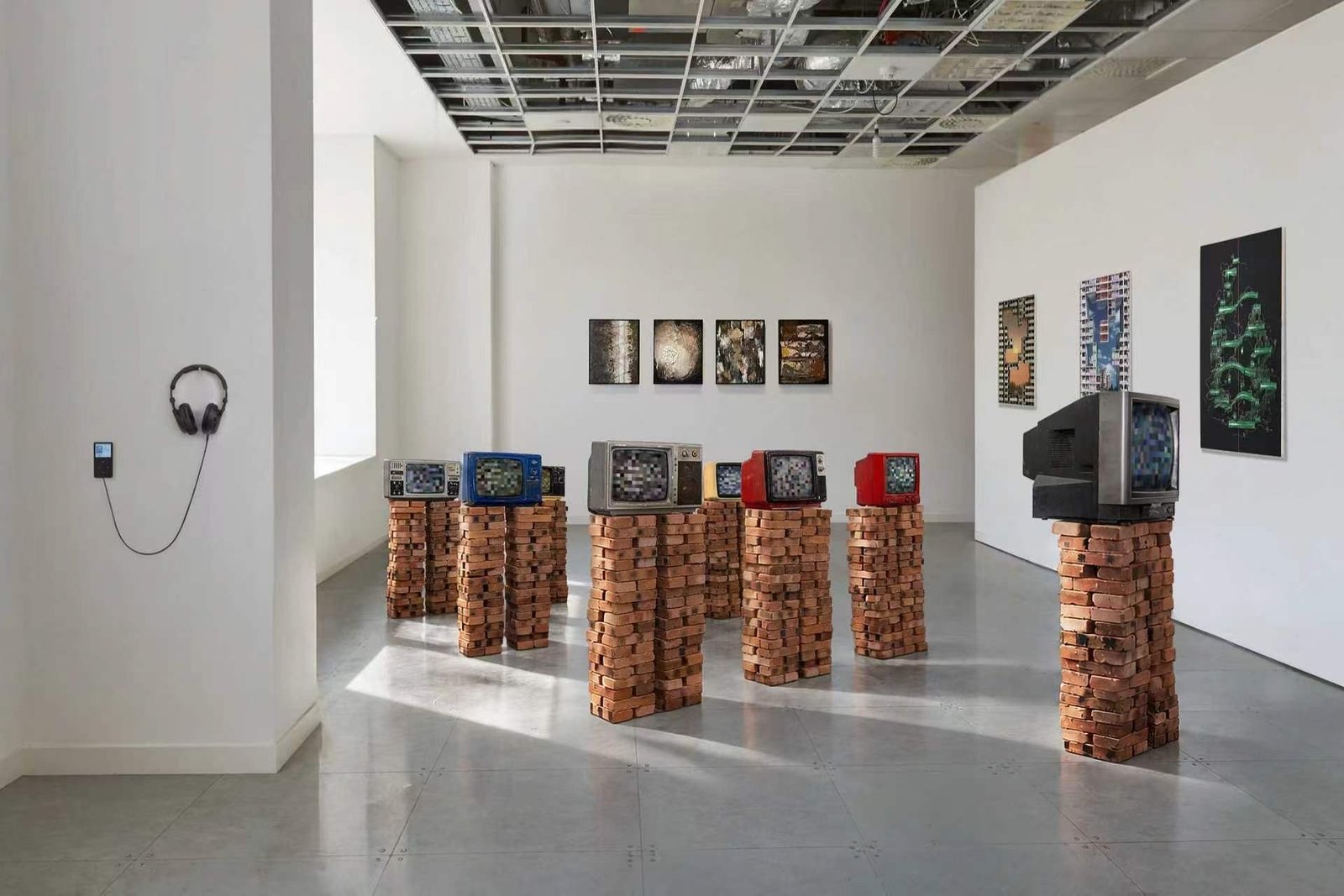
In Xingxuan Wang’s Pixel Masonry, architectural and media structures are brought into direct contact. Red bricks and damaged CRT televisions form a temporary construction suspended between ruin and infrastructure, while brick and pixel function as parallel units for constructing physical and digital space. Once the televisions lose their capacity to display coherent images, they produce not absence but colour, distortion, residual signals and the persistent material weight of hardware.
The work resists understanding technological failure as disappearance. Obsolete media continue through electronic waste, residual signals and material accumulation, revealing an afterlife of technological systems that extends far beyond their period of use.
This dismantling of media structure shifts towards the digital interface in Shaoming Quan’s Woven Echoes. Audio tracks, waveforms, file structures and software interfaces are detached from their instrumental functions and reorganised into formations positioned between machine, vegetation and organism.
Elements normally treated as transparent tools for organising information acquire their own visual and material presence, while data moves from managed content towards a structure capable of connection, circulation and reformation. Across Quan’s wider practice, this shift destabilises conventional hierarchies between subject, tool and information, displacing the human from its assumed position at the centre of technological systems.
“Every frame clarifies by excluding, compressing or renaming what does not conform to its terms.”
Xi Huang’s sound work Silent brings the exhibition into the realm of perception. Its title does not simply signify an absence of sound, but foregrounds the distinction between acoustic presence and perceptual recognition. Unlike images and objects with visible edges, sound is inherently permeable, intersecting with the architecture of the exhibition space, the movement of viewers and the acoustic presence of other works.
Here, the frame shifts from an external object to the listener: hearing itself becomes a system of selection, and what remains unheard cannot simply be equated with what is absent.
Moving from body and architecture through screen and data to sound and perception, What the Frame Cannot Hold constructs a gradual destabilisation of the structures through which reality is made intelligible.
The exhibition does not reject boundaries as such; instead, it exposes the politics embedded within them. Every frame clarifies by excluding, compressing or renaming what does not conform to its terms. Rather than offering a singular statement about technology or posthumanism, the exhibition invites audiences to reconsider the conditions through which ideas of wholeness, normality, visibility and presence are produced in the first place.
Curated by Lin Wu Forrest, the exhibition also continues his Physical–Digital Curatorial Practice (PDCP), extending the presentation across physical and virtual exhibition spaces. Here, PDCP functions less as a separate subject than as a further testing of the frame itself, allowing scale, distance and the relationship between artwork and viewer to shift across different spatial conditions.
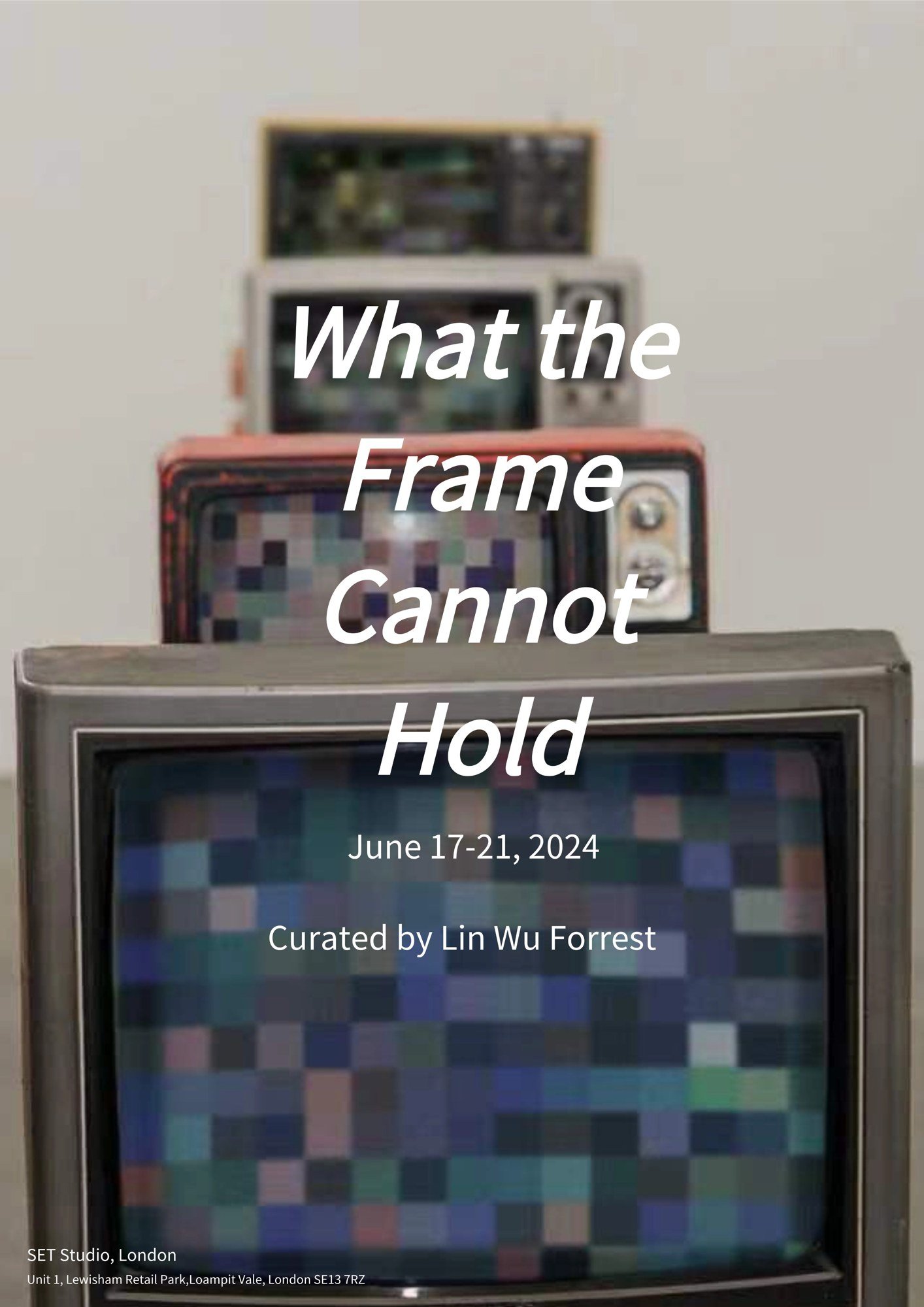
Exhibiting Artists: Xi Huang, Shaoming Quan, Xingxuan Wang, Victoria Yuanli Yuan, Yuange Sheng
Curated by Lin Wu Forrest
SET Studio, London
Opening: 17 June 2024



 No products in the cart.