
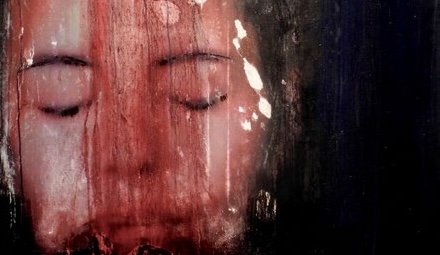
Anne Martin Walsh considers spirituality, exile and identity in Ana Mendieta’s Silueta series and Rupestrian carvings suspended in darkness.
By Anne Martin Walsh | Anecdotes Issue 02
The academic Ruby Rich was of the opinion that Mendieta was influenced as much by feminism / ecofeminism as she was by her circumstances, feminism being the basis of her work. Others considered her “Siluetas” (created in the 1970’s) to be earth works, but Mendieta was not of this mind.
Her engagement with the earth and the hybrid body / earth art was soaked in spirituality, ritual and the elements. Inspired by ancient religions, especially those of Cuba, she performed and carved out goddess like art works, driven on by a need to establish an identity, to belong. The “Earth Mother” was prominent in this work and although feminism appropriated her “Siluetas” for their cause Mendieta felt this work to be more specific than their “general goddess” sentiment.
Ana Mendieta had a strong belief in the spiritual ancient past and in her “Siluetas” she was communing with the earth, as was practiced in ancient times. It was an earthly womb from which she was reborn, a spiritual awakening of the senses.
“Hard times are coming, but I believe we who are artists will continue making our work.”
This was similar to the experience of the author, Nan Shepard, while walking in the Scottish mountains, this feeling of a connection with the elements. The ephemeral nature of Mendieta’s work meant that no mark was everlasting, she was there and then she was gone, the organic form of her body all that remained for a short while. These ghost-like doppelgangers leave the viewer foraging for the genuine Ana Mendieta.
The Rupestrian carvings were made in the early 1980’s on her visits to Cuba. Influenced by the native Indian “Taino” people she commandeered their goddess names for her own works. These are spiritual as well as sensual art works and this spirituality was the basis of Mendieta’s work as a female, an exile and an artist.
The Rupestrian carvings were created in an effort to reconnect with her native land, to feel a sense of belonging. In fact, this only helped to emphasize the in-between-ness of her existence, now she did not fully belong to America or to her native Cuba. It could be said, though Mendieta was influenced by the feminist movement of the time, it was her exile from Cuba and the search for an identity that was the dominant influence. This is what gave her the determination and will to make such inspiring art works. In the words of Ana Mendieta:
“And so the question of integrity in aesthetics is coming up again historically. It is a personal question which each artist faces. It is a constant struggle. Hard times are coming, but I believe we who are artists will continue making our work. We will be ignored but we will be here.”
— Mendieta, as cited in Harrison & Wood, 2003, pg. 106
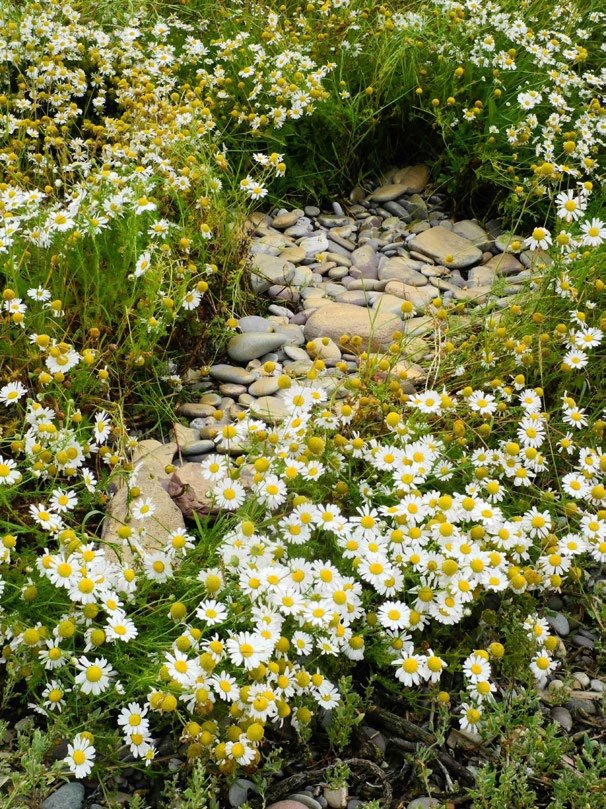
Series of 7. Anne Martin Walsh, 2026.
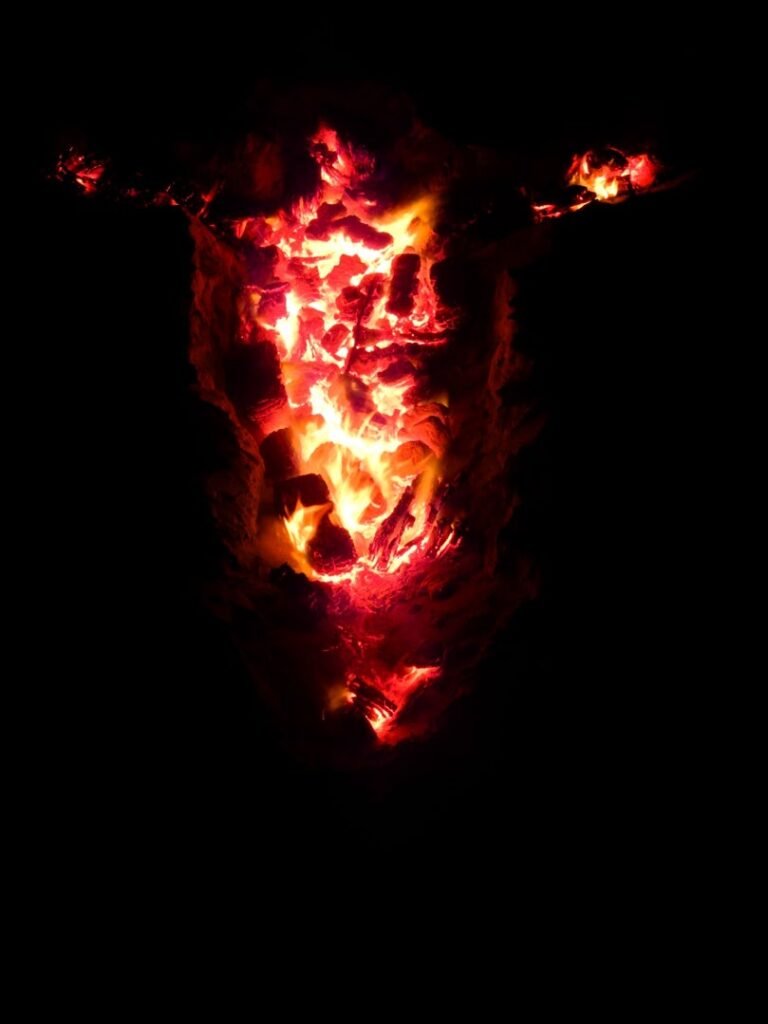
Series of 7. Anne Martin Walsh, 2026. Work influenced by Ana Mendieta.
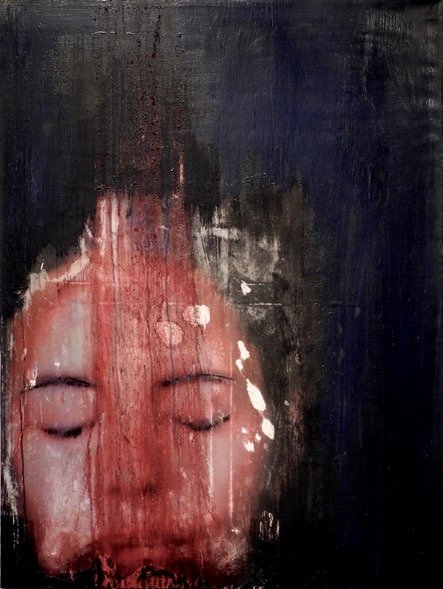
Anne Martin Walsh
I am a multidisciplinary visual artist based in Co. Wexford.
My practice explores themes of sexual and cultural identity that relate to our natural environment. My work has been shown both nationally and internationally.
Anecdotes Print Magazine Bundle
€16.99*
All three issues of Anecdotes in a beautiful print.
*Excluding postage


 No products in the cart.