
Padraig Trehy reflects on Charlie Chaplin, improvisation and the creative freedom of making films through uncertainty, intuition and shared experience.
By Padraig Trehy | Anecdotes Issue 03
I love chaos. I love the gentle messiness of beginnings. I love to feel outside myself.
I love to pile the ideas around me in books, journals, pictures, albums – I feel the calmness of asymmetry.
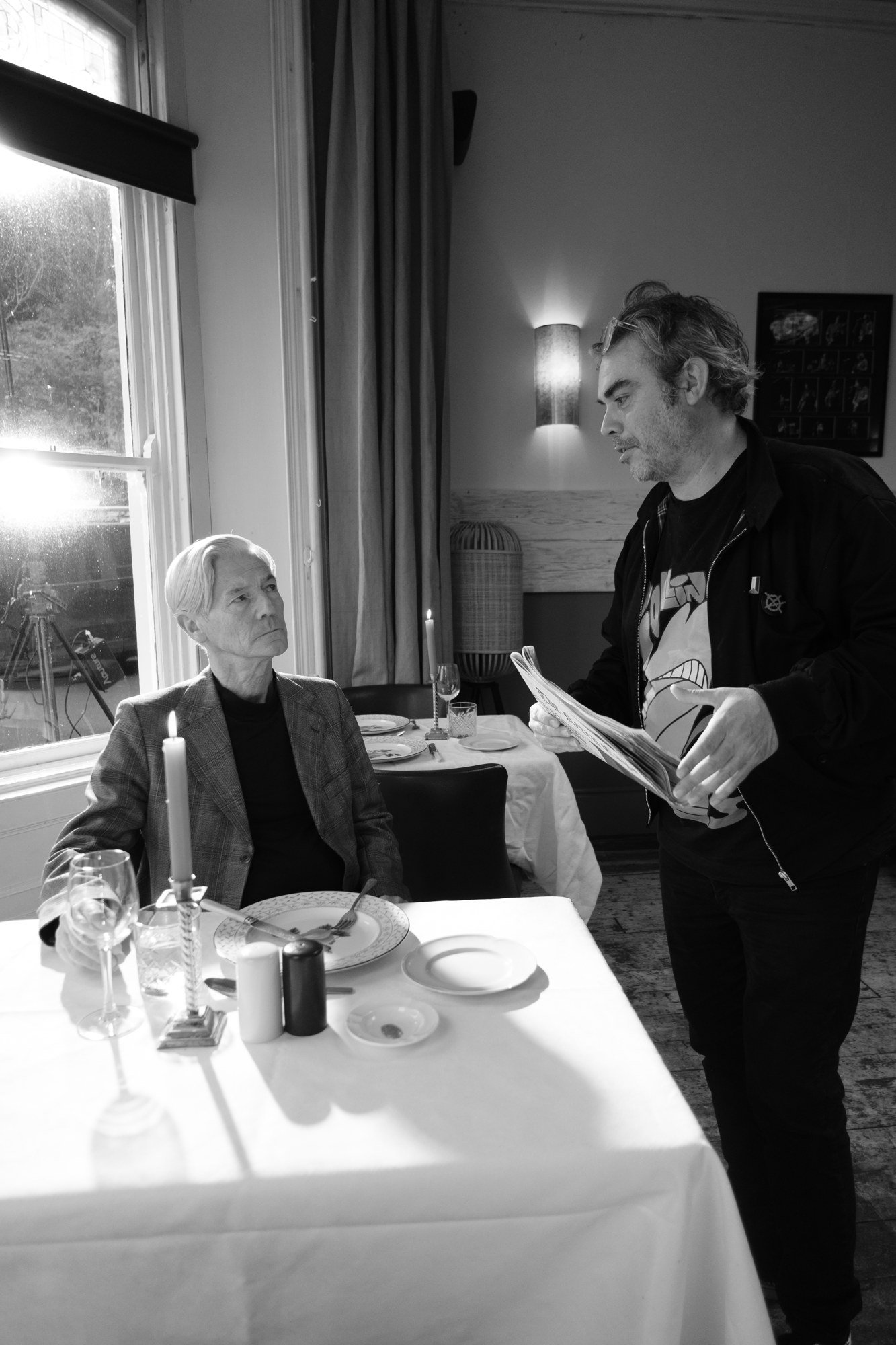
I love to sit and read, and listen, and write and dream.
Then I take my body for a walk or a ride and see what else will occur.
I love the seeming random chances that I encounter once I leave the house.
I love it when I don’t decide where to go, that I have people to negotiate with.
I love the annoyance caused.
I love not knowing – just feeling where I want to get to – I have some images forming but in warm confusion – I start to understand what I want the work to feel like – not to me – but to other people – outside.
I love to make things up as I go along – I love the freedom of not necessarily knowing what’s coming next – especially from my mouth – I don’t like making shit up however, pretending that you put a lot of thought into something, winging it – lying. Making things up as I go along is a phrase that implies the movement of the body but scapes from the notion of a work ethic which frames so much art practice and just leads to busy work – making shit up for the sake of proving you are working. It is not always helpful or healthy to keep making, or writing or recording if all you are doing is going through the motions – there is a need to enjoy the motions.
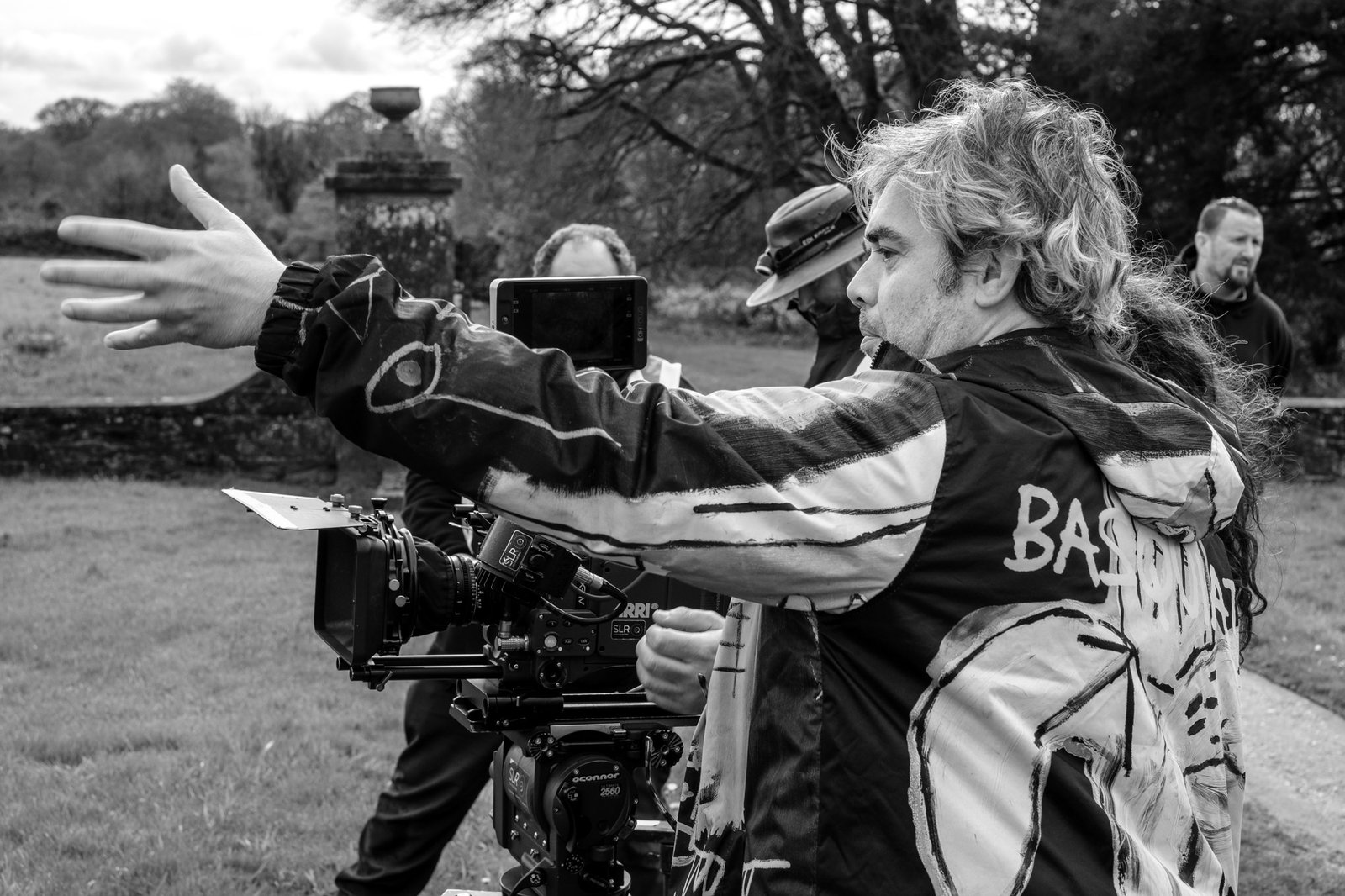
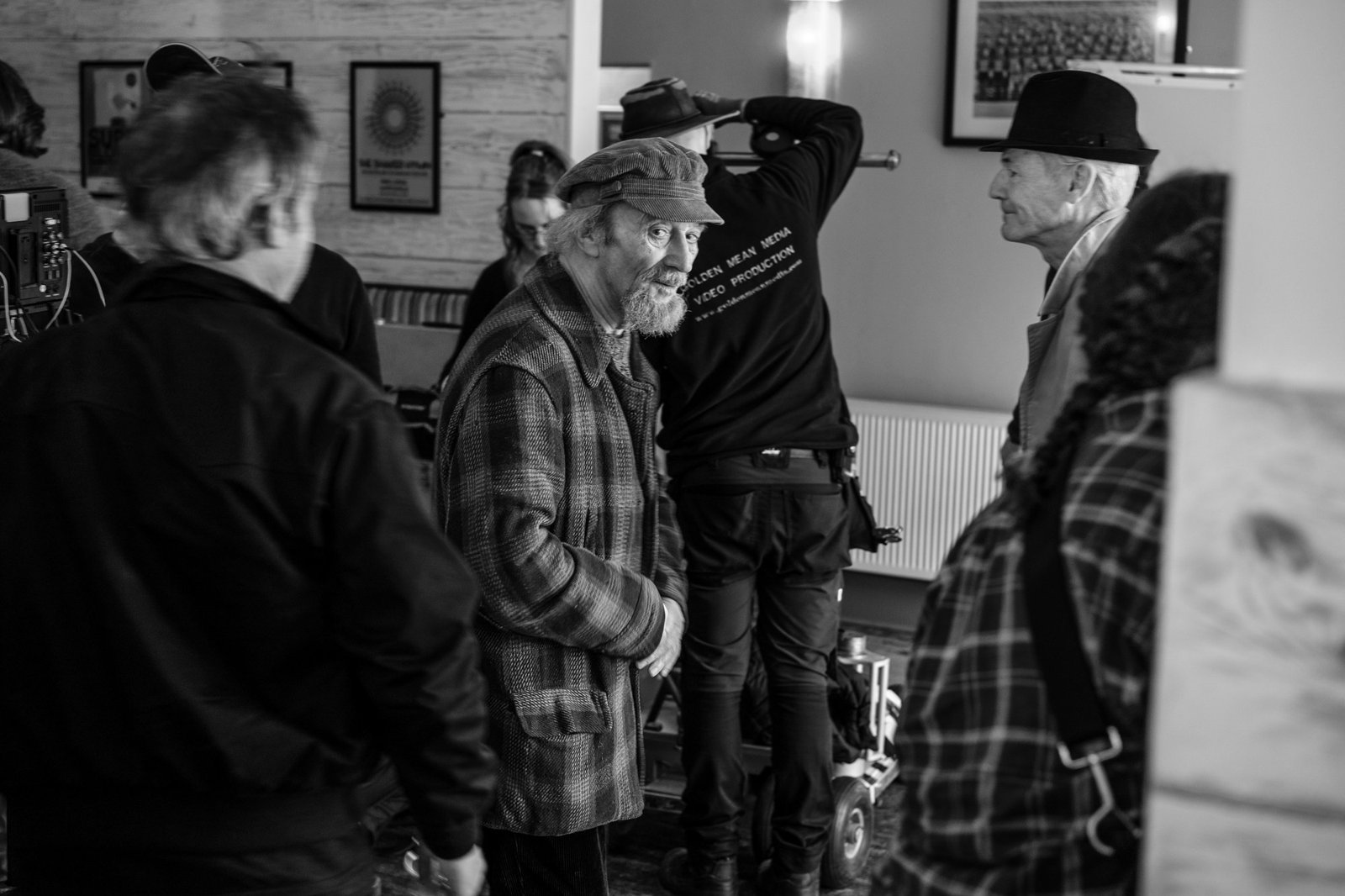
I love the motions and when I don’t, I do other shit – or I sit and stare – out the window, at the wall, sometimes at the screen – whatever takes my fancy – I don’t have a routine, just different habits. They are not good habits, they are just mine.
Making things up as I go along is fun but not just for me – if it is done well and fluidly, belonging to the moment, then it works for the audience, whoever is watching, listening, feeling…
I can trace the beginnings of this tendency …
I love Chaplin. Chaplin liked make things up as he went along – well he liked to make the audience think he did this – and he made sure to burn the evidence.
The chaos starts for me on the cusp of adolescence. In June of 1984 I lost my grandmother, in September my grandfather and in between I found Charlie Chaplin. My first proper introductions to death were tempered by the impact made on life by the little fellow. Like most conscious humans I was already aware of the Tramp but my discovery that summer was of Chaplin the director, the composer, the artist. The emotional upheaval was inducing a lot of staring … one evening I sat in front of an episode of The Unknown Chaplin documentary series made by Kevin Brownlow and David Gill – what struck me so profoundly was Chaplin’s working method. Up until the late 1930s, he never wrote a script in the conventional sense – he improvised everything in front of the camera and on film. He was directing himself so needed to be able to look at his performance and judge its effectiveness as objectively as possible. There was more to it than this however; here was a method led by intuition, accident and luck, often dependent on the collaborators that Chaplin chose to surround himself with on any given day. When he landed on the version that he wanted to share, he would burn the evidence, literally. These were the days when there was still traces of silver in the nitrate film stock, so there was a small amount of oney to be clawed back in this process; but even the notoriously money conscious Chaplin wasn’t motivated by this. He wanted to maintain the magic of his performance, the naturalness and humanity of his on-screen persona, the illusion that everything we saw on screen had developed naturally and in the moment and not over the course of multiple takes over multiple days.
I intuitively knew that this was what I wanted to do – not to perform comedy – not to simply direct a film – but in some way to make it up as I went along. It took me years to fully grasp this and also how much at odds this intention was going to put me with potential collaborators and funders in theatre and film.
I love the illusion – making it up as you go along – this implies a lack of respect or commitment but in actual fact, for me it is the direct opposite to what it seems – I am deeply committed to the moment of creation, to the act of belonging to the world and the continuum of our existence – I don’t just make it up as I go along, I ensure that I bring as many options to the room as humanly possible – if you want to engage in improvisation the you need to be constantly alive to the possibilities of life and art – driven by curiosity, magpieing your way through the world collecting stories, movements, sounds, connections, feelings, reactions, desires, frames, hope – for me the best expression of this remains Jean-Luc Godard’s “Seul le Cinema/Everything is Cinema”. This to me speaks to the fact that I am constantly collecting, asking if this sight, sound, feeling is something I can use, put in a movie – but more than that it speaks to my intuitive and quasi-religious belief in the power and supremacy of cinema amongst the arts – that’s what I somehow knew back in 1984 – the power of cinema to both encapsulate the artistic advancements of thousands of years of human endeavour but also its power in offering this synthesis in sound and image back to the world in potentially popular and democratic forms which the true believers like Godard, Sergei Eisenstein and Maya Deren believed could change the world by bringing people together in a shared communal experience that made them recognise their shared humanity by educating them in their respectful silence about our differences and the benefits of empathy. In a world which constantly erodes our freedoms, the cinema is more important than ever in bringing us together and showing us our power. Where once I was intuitively attracted to burning the evidence, I have long seen this as my political pathway – firstly in escaping the tyranny of the plan, of project management, and then to embrace the fear and anxiety of uncertainty, for only a fool thinks they know the future. Secondly, in this century, the destruction of my creative data is more important than ever – I refuse to be studied algorithmically – I will create an unholy mess and then lose it – I have written this in hand to feel the pen and avoid the screen and Qwerty grid – I like the flow, even if it is now harder to decipher, uneven graphically and tonally, but it is me, these are my words, I made them up as I went along.
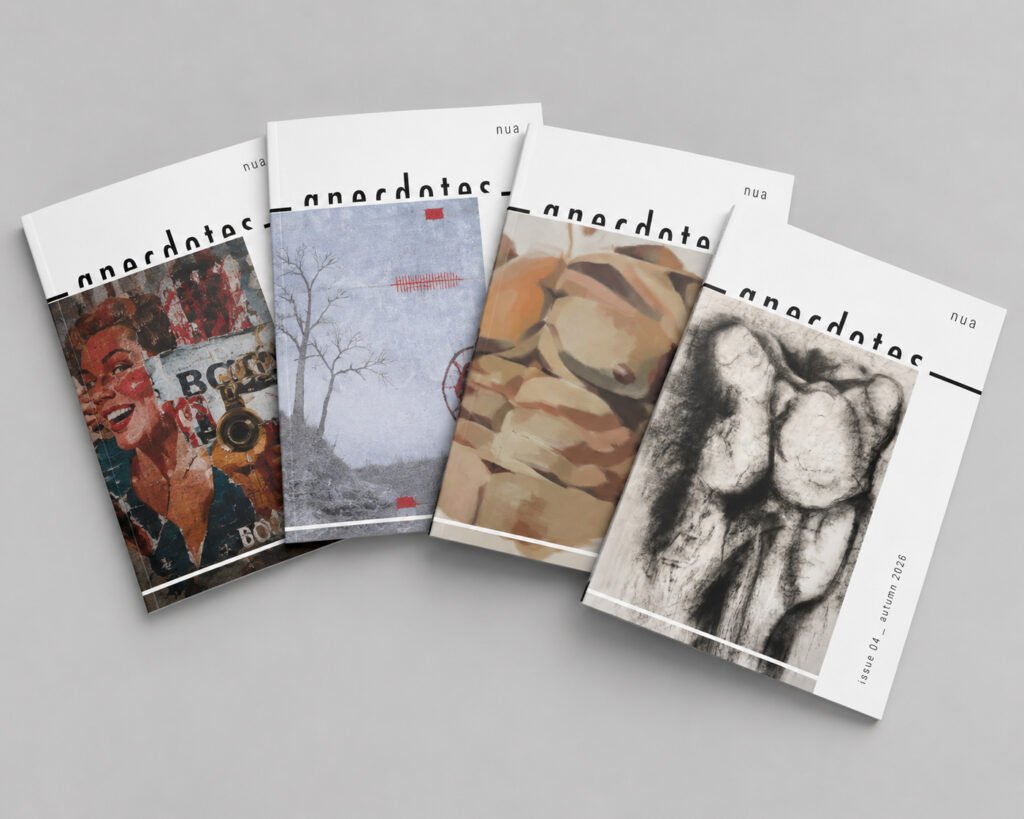
Anecdotes – 4 Issue Bundle
Own the complete Anecdotes collection. This bundle includes Issues 01–04, featuring 246 pages of contemporary art, artist essays and studio reflections in a premium A5 magazine format.


 No products in the cart.