
Enrique Hernandez explores observation, colour, slow painting and the search for artistic truth beyond realism, perfection and external validation.
By Enrique Hernandez | Anecdotes Issue 03
It fills me with a certain lightness to think about how quickly artistic work evolves, and often even the ideas one focuses on, or the way one perceives one’s own approach to art. If I had to define my work over these last few months in two words, one would be observation. For the other I would choose something like construction.
Recently, I have begun to group my lines of work more and more within a narrative. I think that, many times as an artist, I have felt that creating a narrative implies a very deep dimension that can sometimes cause art to dissolve into a concept and a discourse which do not necessarily make it more art, but rather an extension of another idea. However, there is a driving force in the act of grouping ideas.
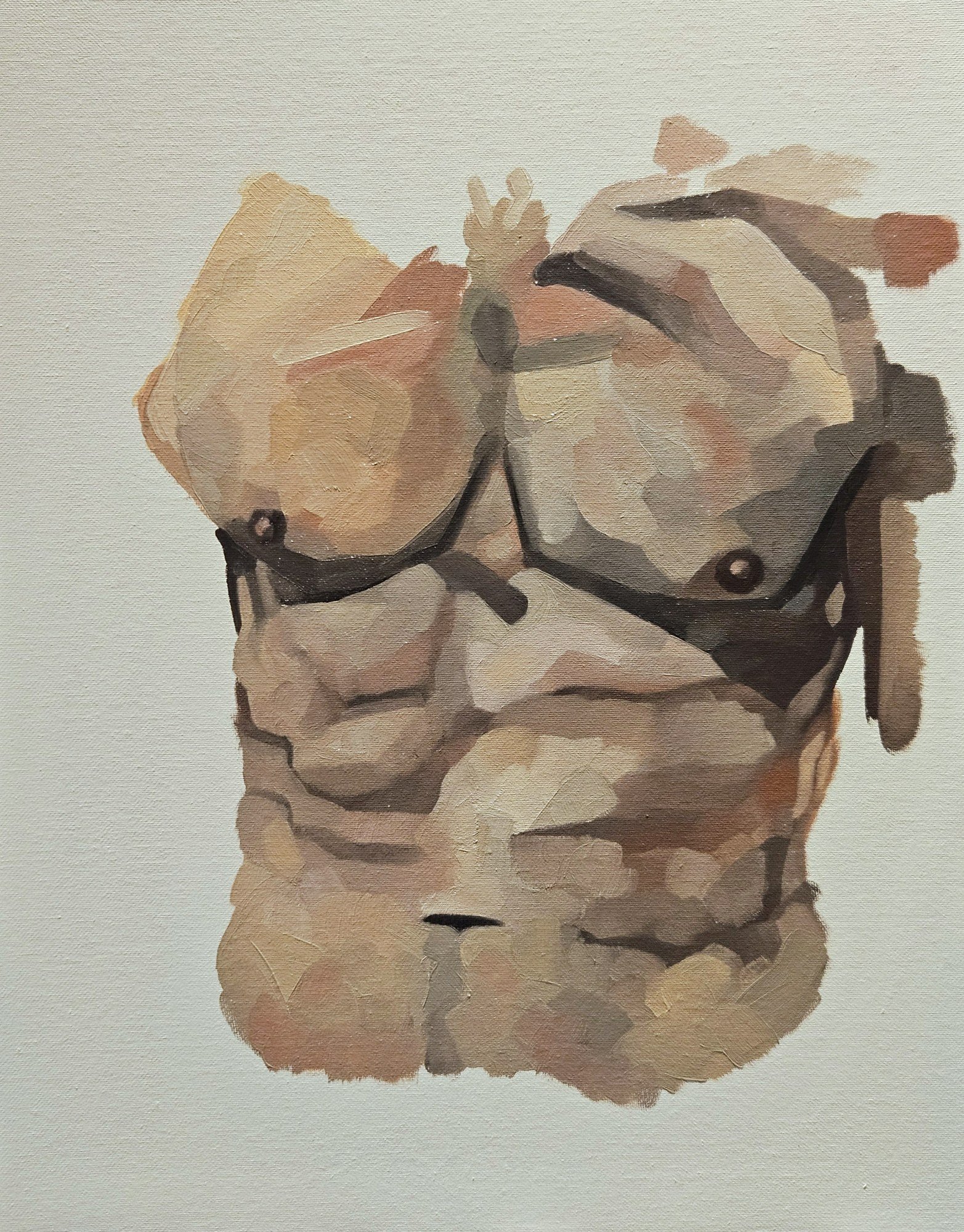
In addition to art as a pictorial process, I have also been making music for several years, and recently I have found myself having to group a large number of songs if, in some way, I want to release them into the world. Certain songs share a common thread, and grouping them into smaller projects makes them more “manageable”. I can have a narrative proposal for each group and see them as carrying more weight than a tumult of four dozen ideas. I am beginning to feel a desire to work on each album as a “project”, beyond working on each song. I am also excited about physical albums, on CD, for example, and about creating a tangible and “tactile” work.
It is curious, because the word tactile has crossed my mind, hummed through the streets of my brain centre, quite a few times over these last months. “The tactile quality of painting.” There is something in that “touching”, that “fiddling”, which has made me much more interested in oil painting as a medium. In painting itself, not even the canvas, or the “subject”.
For example, mixing paint, something that used to feel slightly tedious, has become a delicious ritual. It helped me to move towards more primary and vivid colours, something I discovered a couple of months ago in Paris: cadmium red and cadmium yellow, real cadmium, something in its density and viscosity. It also helped me to move away from yellow ochre, and to bring alizarin crimson into the process. I, who had always rejected semi transparent colours! And now something special has awakened in me through the feel of spreading them with the palette knife, on the palette! I have discovered mixtures, combinations of purples, embracing saturation. I like it. I like it very much.
Another thing I have embraced is slow time, getting lost and not enclosing myself within a temporal frame. I am allowing myself the luxury of painting; layers and layers, of building. Of sitting down, of being with the work and conversing with it, of coexisting with it.
The process. It might lead nowhere, and even so… what a delight!
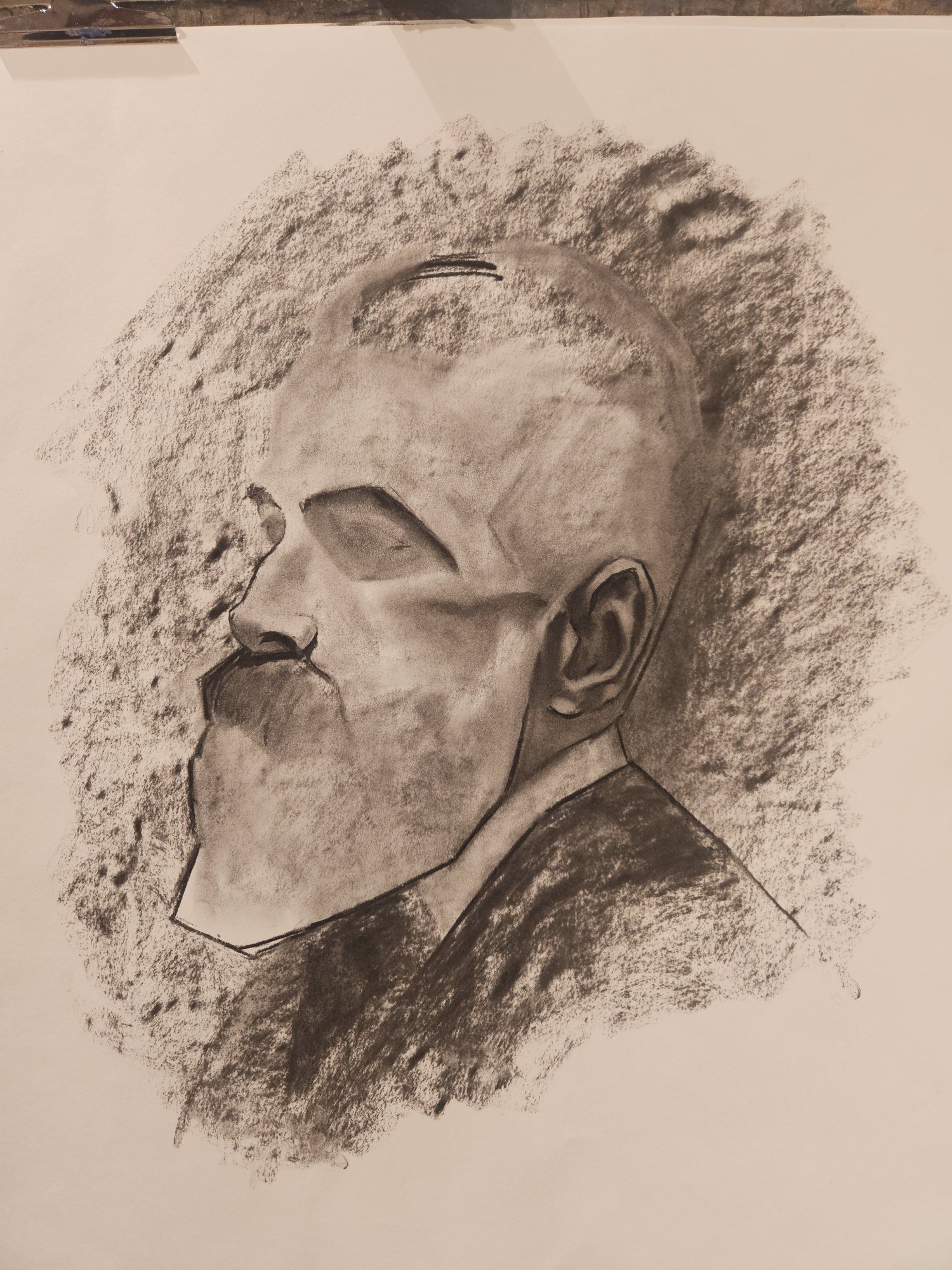
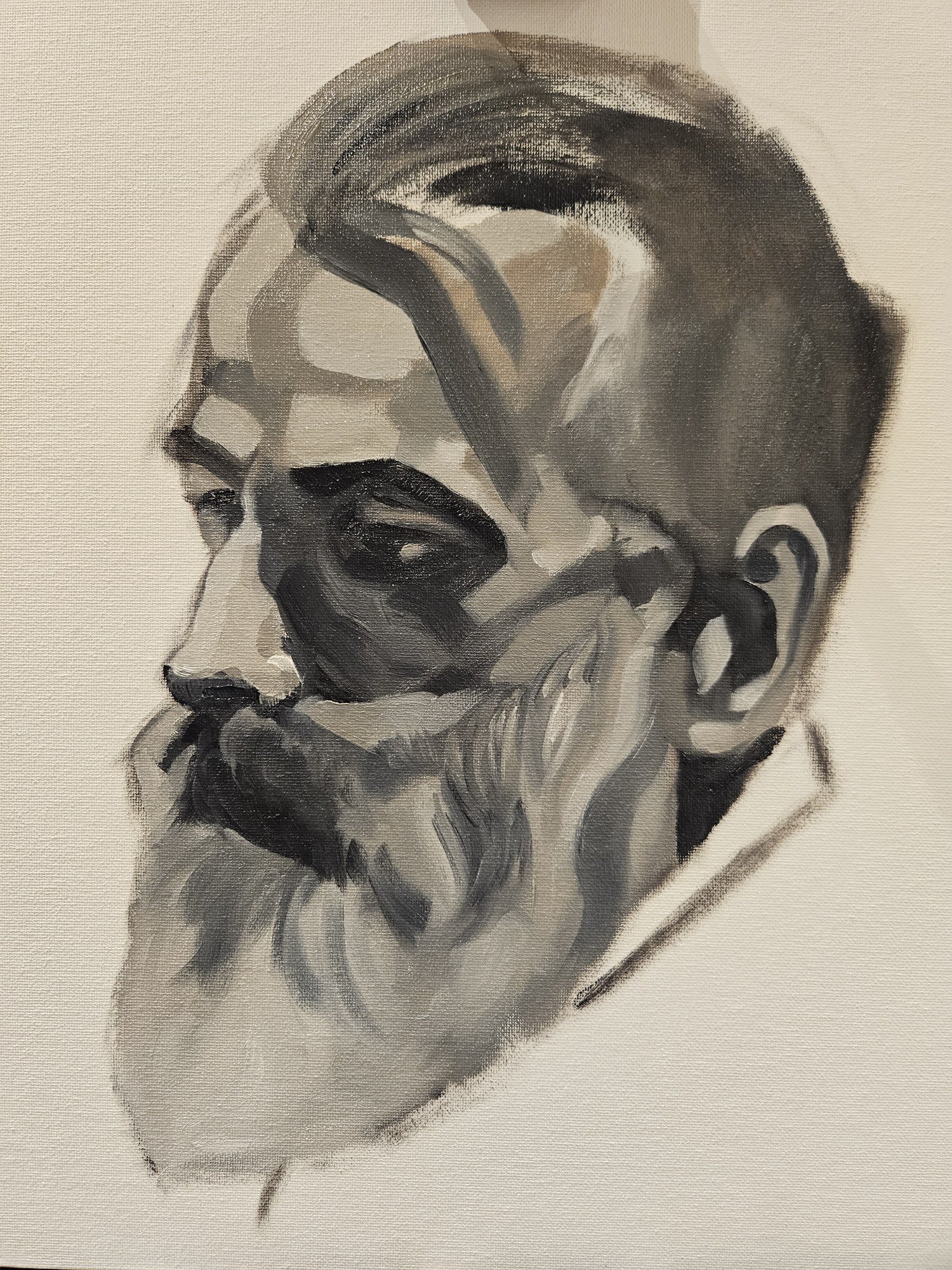
In my self portrait; how many turns, how much observation: the reds, the yellows, the violets! A little brown, but very little. No ochres, no muted colours.
I consider this a particularly important step, if I look at it through the prism of the last couple of years and my work on them. Just one year ago, or a year and a half ago, I would rush into painting; I found it difficult to resist the call to finish the work as soon as possible. I enjoy working “alla prima”, but there is also a great deal of beauty in allowing oneself to get lost. I now have more hours, and a more central role for pictorial art, which gives me the opportunity to allow myself that.
It is curious, because in reality it contrasts somewhat with my desire to be more daring. Perhaps what I am looking for sits between the extremes; a daring that is not haste, and an observation that is not excessive meticulousness.
Perhaps I am confusing observation with pictorial construction. My interest in scrutinising the recesses of the scene… that is something I do not want to lose. To place myself within the framework of “realism” is the result of my obsession, an obsession I embrace, with understanding and “dismantling” the scene. The beauty of the artistic scene is impossible to fully encompass. And in that desire to encompass it, I take the time to observe. I take the time to see beyond what I would see if I were not painting; that, for me, is painting, creating that space and that time in which truth exists, beyond reality.
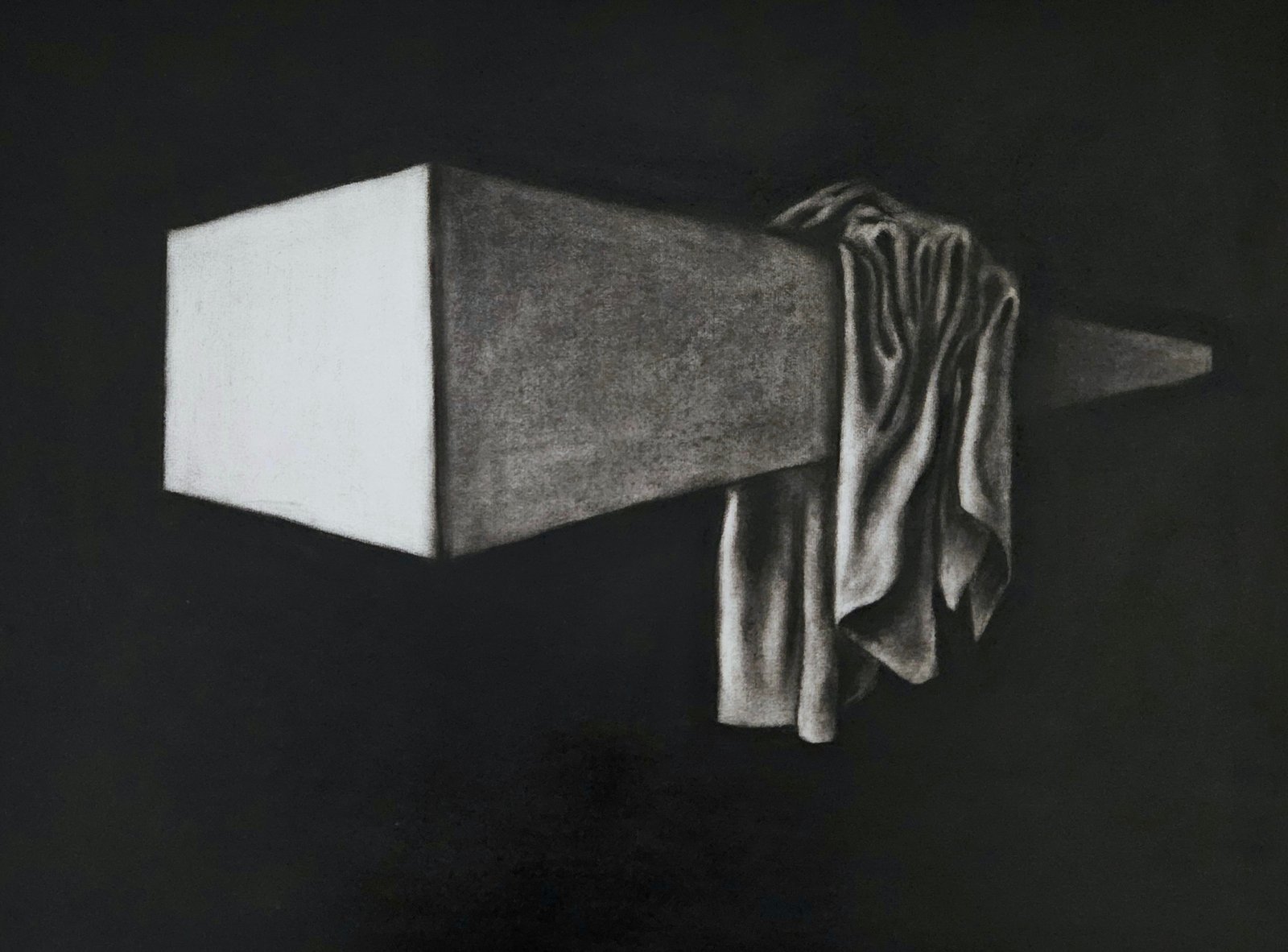
It is a question of how far I can make the scene cease to be real by making it as truthful as possible. What two words: truth and reality! How often I feel that there is more truth in what is not real than in reality itself! Stephen King said, in front of the question of what one should write about, “Anything you damn well want. Anything at all… as long as you tell the truth.” [1] I think of my works on “the uncanny”, in charcoal, and I think they are a very good example of how I tried to stretch, to tighten the screws of whatever most captured my attention in observation. I would not call it “forcing”, however, but “stretching”, to the point that my created world became more itself. To the point where it became uncomfortable to look at, because it was the raw truth. To come across one of those drawings in a room and have to confront it, like the product of a laboratory experiment; that was precisely what, in a certain way, I felt when “creating” it. That is something I wish to explore more and more.
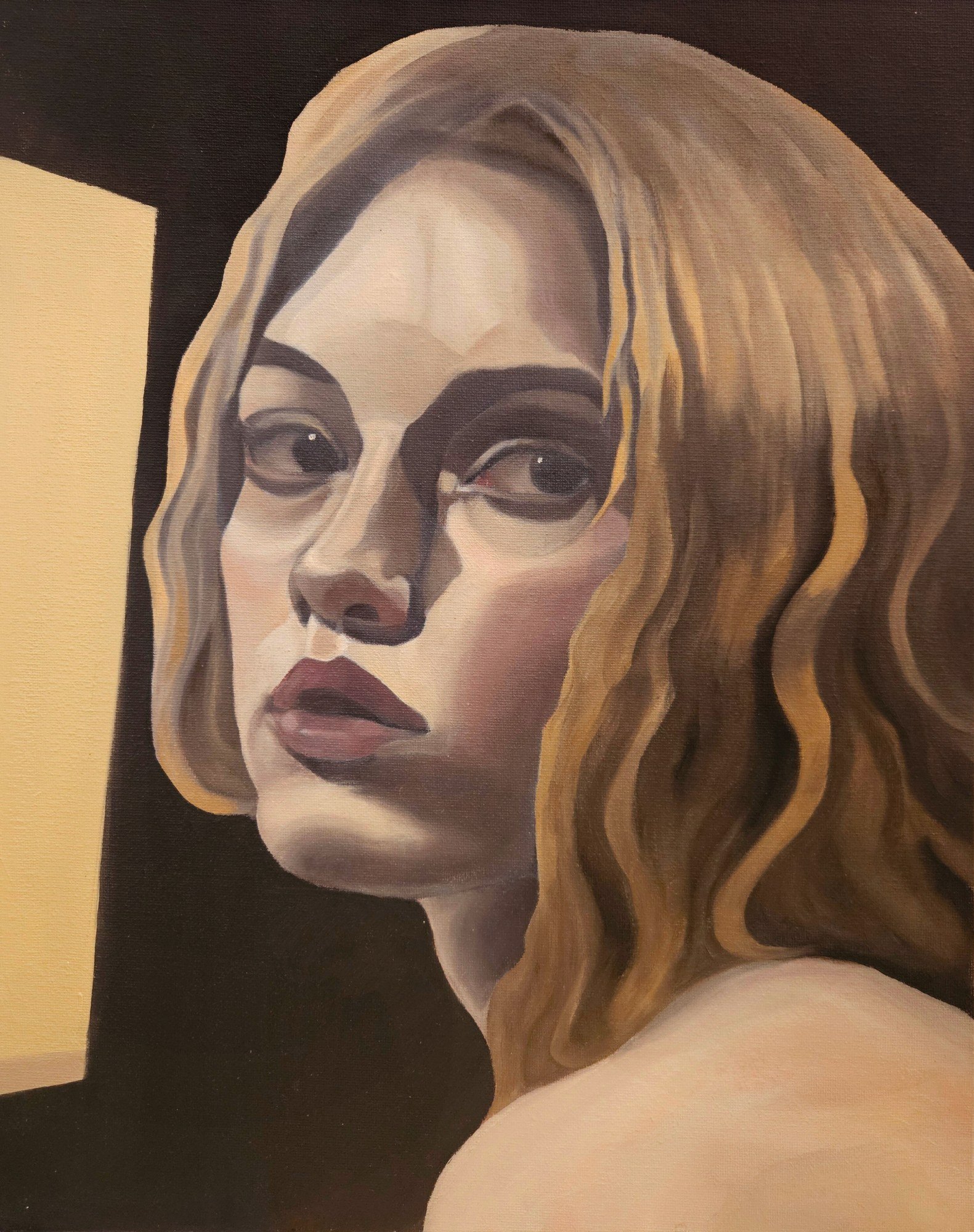
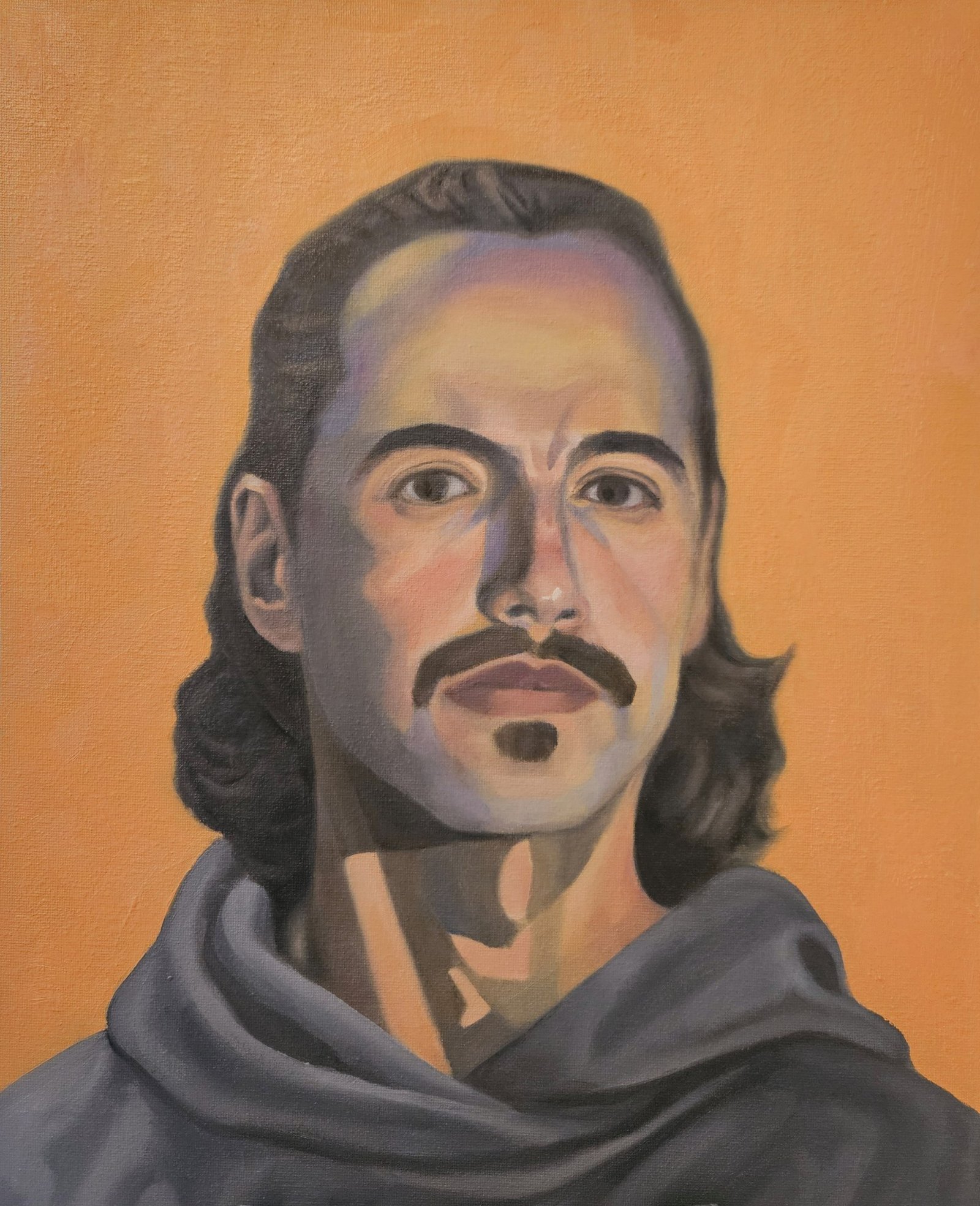
There is also the aspect of realism. I think I am telling myself, at the same time, that I want to understand and master the scene, and that I also want to be daring, faster, less detailed and more “eccentric”, to break those very same rules; aspects such as more visible marks, more saturated colours and a bolder chromatic offering, perhaps even one more distant or “exaggerated” from the pure thesis of what exists. They are not necessarily two extremes; both could coexist. And finding this coexistence will also be part of my process. I do not want to be a slave to either of them, although both contain aspects that frighten me somewhat; that “realism” might make me a prisoner of “perfection”, on the one hand, and that “daring” might end up becoming concept, an unfinished attempt devoid of skill, on the other.
Wanting to accelerate the process is one of the defining trademarks of the modern world. Not doing so, exploring the process, sitting with it, meditating on it and suffering through it until one masters it, or at least until one becomes one with it… perhaps that is where rebellion becomes visible, and allows true, sincere artistic creation to exist. Although there is something in “reducing” that is an exploration of essence, and from that simplification emerges an understanding derived from observation, without necessarily “conceptualising” a scene.
In the end, the conceptualisation of art, the speed, the “I would rather paint this other thing because it suits me better”, or “because it gets better results on Instagram”, or “for the gallery”, or “for my reputation”… all of that, however much it seems to move one forward towards what works, the ideal, the perfect, the desired and envied, the genius, the seam of gold, the safe, the comfortable, what gives me validation or makes me look good… is the hamster wheel. It is the slaughterhouse of the lamb, it is the wall. That is the real trap, the real cage. How easy it is to lie to oneself!
What is sincere, with oneself, with the work, with others. What is true. To hell with the “real”! I want to make art that tells the truth. Simplifying, extracting, stretching… all of that is possible, and healthy, and meaningful. Synthesising the truth about truth. But truth comes first. Always.
[1] King, S., 2000. On writing: A memoir of the craft. Simon and Schuster.
Enrique Hernandez
Enrique is a figurative artist and creative researcher. Born in 1992 in Madrid, Spain, he now lives and works in York, UK. His work captures the intricate and often conflicting facets of human experience, exploring themes of vulnerability, strength, and the interplay between emotional intensity and quiet introspection. With an approach that prioritises emotional authenticity over traditional technique, Enrique’s art transforms raw materials into visual narratives, challenging viewers to confront both beauty and discomfort.
Anecdotes – 4 Issue Bundle
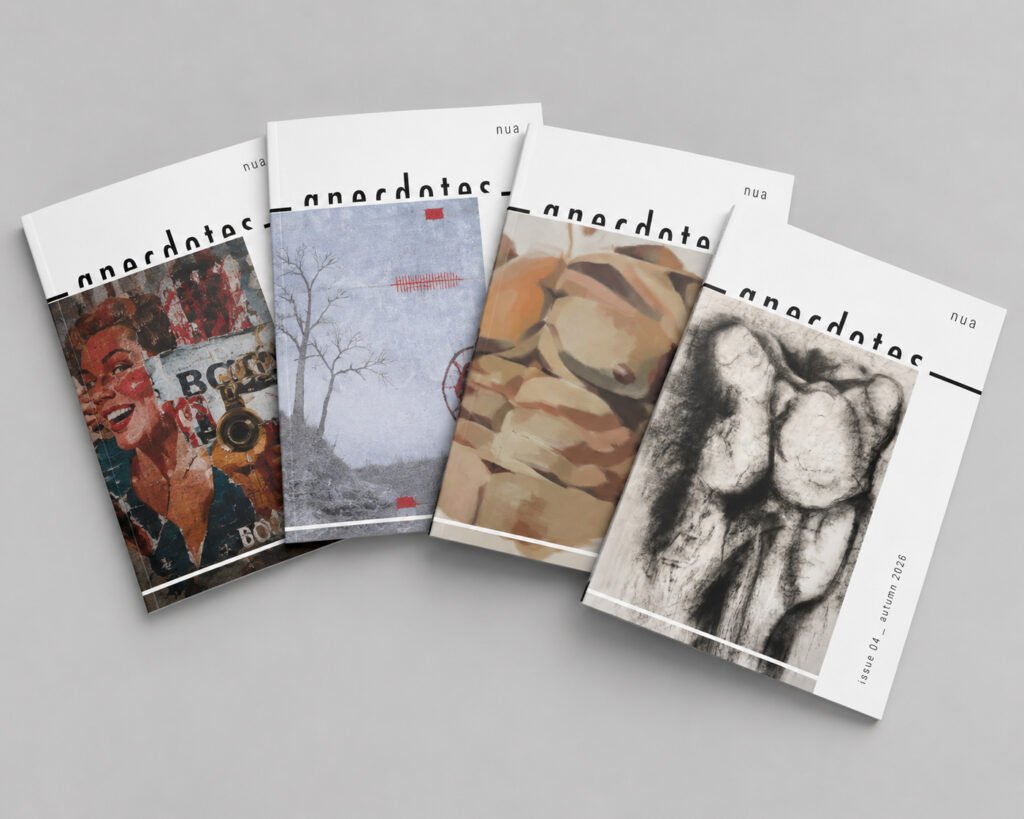
Own the complete Anecdotes collection. This bundle includes Issues 01–04, featuring 246 pages of contemporary art, artist essays and studio reflections in a premium A5 magazine format.


 No products in the cart.